Category

Partnerships

The future cosmetic ingredients will not be discovered. They will be designed.

By Partnerships

The next wave of cosmetic innovation will not come from searching for another promising molecule hidden somewhere in nature. It will come from designing proteins and peptides with specific functions, then manufacturing them efficiently at industrial scale. 

That represents a fundamental shift for the cosmetics industry. 

For decades, ingredient innovation has been constrained by two approaches. Either identify something nature already makes and find a way to extract it. Or develop a synthetic alternative through chemistry.  

Both have produced remarkable products, but both operate within clear boundaries. 

Nature offers an extraordinary diversity of biomolecules, but only a tiny fraction can be sourced economically and sustainably. Chemistry enables countless innovations, yet some of biology’s complexity remains difficult or impossible to replicate. 

Proteins illustrate this challenge particularly well. 

Collagen has become one of the best-known cosmetic ingredients, but the collagen used in most products today isn’t human: it’s animal collagen, typically bovine, porcine, or marine sources. Species differences aren’t cosmetic details here. They affect how the human skin responds to it, and animal sourcing brings its own supply and safety questions. Recombinant, human-identical collagen changes that equation. It’s not a substitute for animal collagen, it’s the same molecule the body already makes, manufactured differently. 

The more interesting shift may be happening elsewhere. A growing category of ingredients doesn’t try to replace collagen at all. Signal peptides like Matrixyl don’t add collagen to the skin, they instruct the skin’s own fibroblasts to produce more of it. These are entirely engineered molecules, often unrelated in structure to any natural human protein, designed purely for the signal they send. It’s a preview of where de novo protein design is headed: not better versions of what nature makes, but new molecules built around a single desired function. 

The industry has spent years asking how existing ingredients could be sourced more sustainably, produced more efficiently, or replaced with alternatives. That remains an important challenge. But a far more interesting question is beginning to emerge: what if the ideal cosmetic ingredient doesn’t already exist? 

Biology is becoming a design space 


Recent advances in computational biology and artificial intelligence are changing how scientists think about proteins. 

Instead of searching nature for molecules with useful properties, researchers can increasingly design proteins and peptides with desired characteristics from the ground up. Functional protein design is advancing rapidly. Protein binders can be engineered for specific molecular targets. Stability can be optimized computationally. Bioactive peptides can be designed with functions that would have been extraordinarily difficult to discover through traditional screening alone. 

Perhaps most exciting is the emergence of de novo protein design. Rather than modifying proteins that already exist in nature, scientists can create entirely new protein sequences designed for a particular purpose. 

For cosmetics, the possibilities are extensive.

Imagine proteins designed to interact with specific skin targets. Bioactive peptides engineered for greater stability in formulation. Novel antimicrobial peptides. Functional proteins optimized for texture, delivery, or performance. Entirely new classes of ingredients created around a cosmetic function rather than copied from nature. 

The design space becomes dramatically larger than nature alone. But designing a protein is only part of the equation. 

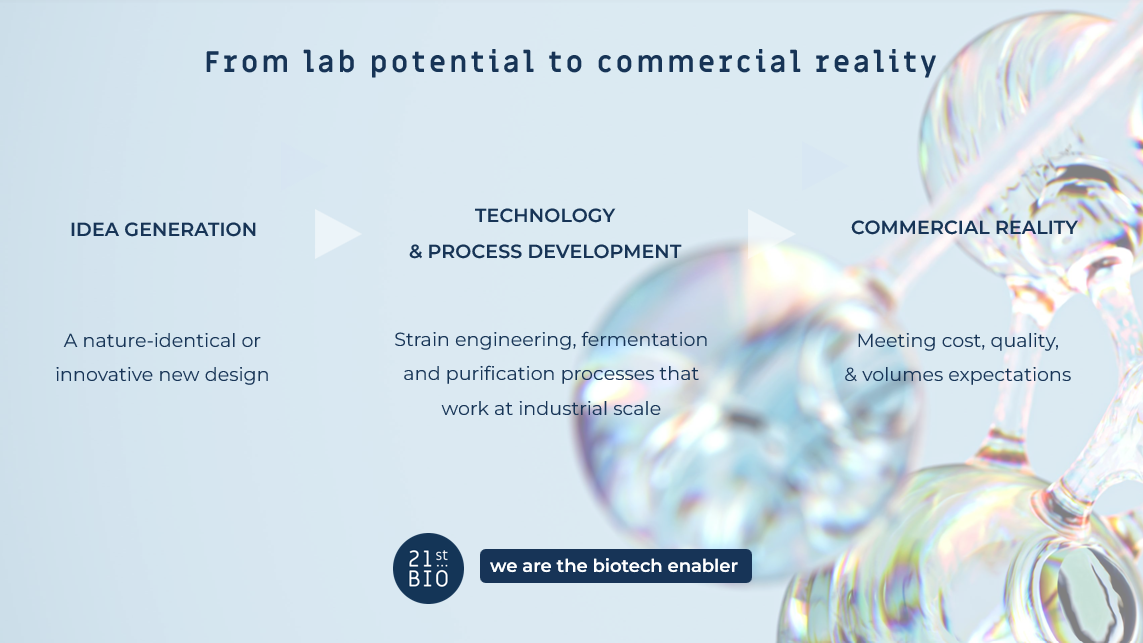
From digital protein to commercial ingredient 


A protein sequence generated by AI is still only a digital design. Turning that sequence into a commercial ingredient requires solving an entirely different set of challenges. 

  • Can the protein actually be expressed inside a microbial production host? 
  • Will it fold correctly into its intended structure? 
  • Can high enough yields be achieved to make manufacturing economically viable? 
  • Can downstream processing purify it efficiently? 
  • Will the production process meet the quality, consistency, and cost requirements expected by the cosmetics industry? 

These questions often determine whether a promising concept becomes a commercial product or remains an interesting publication. The manufacturability gap is increasingly becoming one of the defining challenges for next-generation protein innovation. As AI accelerates the ability to design proteins, industrial manufacturing becomes the critical enabling capability. This is where 21st.BIO plays a unique role. 

21st.BIO bridges design and reality 


Rather than competing with computational protein design, precision fermentation enables it. AI can help determine what should be built. Biomanufacturing determines whether it can be produced reliably, consistently, and at industrial scale. 

Developing a manufacturing process is far more than inserting a DNA sequence into a microorganism. It requires selecting the right production host, engineering strains for high performance, optimizing fermentation conditions, designing efficient downstream purification, and creating a scalable process capable of delivering commercial quantities with consistent quality. 

Every one of those steps influences the final economics of an ingredient. 

The most elegant protein design has little value if manufacturing costs make it commercially impossible. Conversely, a manufacturable protein with robust industrial performance creates opportunities that extend well beyond the laboratory. 

Manufacturing biology is no longer simply about reproducing proteins found in nature. It is becoming the platform that enables entirely new categories of ingredients. 

A different question for the cosmetics industry 


Biomanufacturing changes how cosmetic companies can think about innovation.  

For many years, the discussion around precision fermentation has focused on replacing existing ingredients. That remains valuable. Familiar proteins such as collagen, elastin, keratin, or silk proteins can all benefit from scalable, animal-free production through precision fermentation.  

Ingredients no longer need to be limited by what evolution happened to produce. They can be designed around functionality, performance, stability, manufacturability, or entirely new biological mechanisms. 

Discovery becomes design. 

From protein design to commercial reality 


The convergence of AI and precision fermentation has the potential to reshape how cosmetic ingredients are developed. 

AI expands what can be imagined. Precision fermentation expands what can be manufactured. Together, they create a pathway from computational design to commercial production. 

At 21st.BIO, that is where the focus lies. The company develops and licenses precision fermentation technology that enables partners to manufacture proteins and peptides at industrial scale. Whether those molecules already exist in nature or have been designed from scratch, commercial success depends on building a manufacturing process that delivers quality, scalability, and cost competitiveness. 

The next generation of cosmetic ingredients will likely include proteins that have never existed before. Their value will not come from where they were discovered, but from what they were designed to do. 

The companies that succeed will be those able to combine computational innovation with industrial biotechnology. 

Designing the protein is the beginning. Manufacturing it is what brings it to life. 

Why Partner with 21st.BIO? 

We don’t sell ingredients – we empower ingredient producers and brands with the tech and know-how to make them. By licensing our technology platform, partners gain: 

  • Proprietary strain engineering for protein production building on the legacy of the Novo Group 
  • A future-proof, animal-free protein that meets today’s market needs 
  • Faster time to market – expert technology enables faster regulatory approvals  
  • Expert guidance to identify high-impact applications and scale efficiently 

Let’s build the future of cosmetics – sustainably, scientifically, and at scale.  

Biology is opening a new path in ingredient innovation

By Partnerships

For years, cosmetic innovation has been constrained by what nature can provide and what chemistry can synthesize.

But biology is opening up a third path. Precision fermentation goes further than making existing ingredients more sustainably. It expands the ingredient toolbox itself.

Yes, that includes familiar proteins like collagen, elastin, keratin or silk proteins. But that’s only scratching the surface.

Imagine designing bioactive peptides with enhanced stability. Proteins engineered to bind specific skin targets. Novel antimicrobial peptides. Proteins with tailored functionality. Or entirely new ones that have never existed in nature but are designed for a specific cosmetic application.

This is where things get interesting. AI is making remarkable progress in designing de novo proteins with desired functions. But designing a protein is only half the challenge.

Can it actually be expressed? Can it be manufactured at industrial scale? Can it reach the cost and quality needed for commercial success?

A digital protein that can’t be produced remains… a nice theoretic idea. Precision fermentation is the enabling technology.

At 21st.BIO, we help companies bridge the gap between protein design and commercial reality. We develop and license precision fermentation technology that enables partners to manufacture proteins and peptides at industrial scale – whether they already exist in nature or are entirely new.

For cosmetics companies, this means thinking beyond replacing existing ingredients. It means asking a different question: If manufacturing biology was no longer the bottleneck, what ingredients would you create?

The next generation of cosmetic innovation may not come from discovering new ingredients in nature. It may come from designing them.

Repeated success is no coincidence

By Partnerships

Repeated success is no coincidence.

In the last months, we have onboarded three new customers – each working on different proteins for different industries. And three times, our expression systems delivered over 5 g/L in the supernatant within record time in phase 1B.

For the untrained eye, 5 g/L may not sound like a breakthrough. But hitting it in no time? That’s rare.

Biology demands hard work – and yes, sometimes a bit of luck. But when success keeps repeating, it’s a sign of precision, not probability.

Ready to see how fast we can reach your targets? Let’s find out.

News from our pilot plant

By Partnerships

Idle time? Not here. Since its inauguration in May, our pilot plant has not seen a single week of inactivity.

Dairy proteins, spider silk, molecules for agriculture, proteins used in biomining… You name it, we brew it.

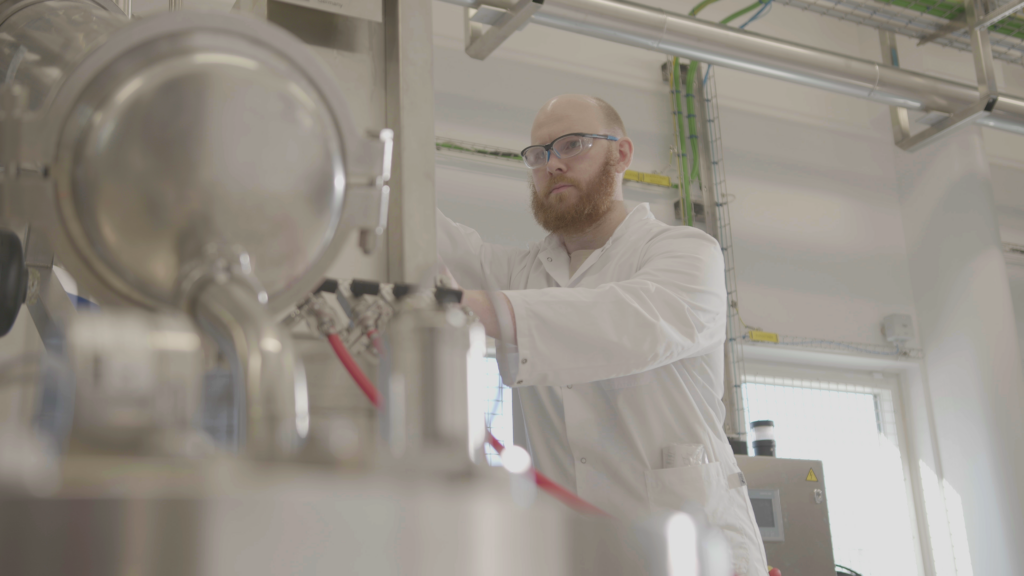
Located in our headquarters in greater Copenhagen, our pilot facility is designed as a full industrial production setup, just downscaled into a pilot plant. This is how we best help companies in their production upscaling: optimizing USP and DSP processes to ensure production in larger volumes will run smooth.

There are many pilots out here – so what’s different with us?

📈 Data and IP: It’s all yours, exactly as it should be. Enjoy full data access during and after your run.

🛠️ Mini factory setup: Featuring the latest equipment from trusted brands – just like what you’ll find at larger scales. Designed to prepare you for industrial production.

🧬 Strain Engineering: Looking to boost your productivity? Our strain experts are here to make it happen.

🤝 We get it: We’re more than just steel. Our own projects face the same upscaling challenges, and we bring this hard-earned experience to the table.

Almost fully booked until March! We’ve got a few spots left – secure our pilot capacity for 2025 now.

Novonesis’ visit to 21st.BIO’s Davis site

By Partnerships

It was a pleasure for us to host Ester Baiget, President and CEO of Novonesis, and Tue Micheelsen, VP and President of North America, at our 21st.BIO Davis office.


During their visit, we showcased our latest advancements in strain engineering, fermentation, and biomanufacturing.

Our production strains, partly based on technology licensed from Novonesis – a global leader in biosolutions and an investor in 21st.BIO – are a testament to our joint R&D expertise.

The techology base licensed from Novonesis has been developed and optimized for large scale production over decades. Our work, built on this strong foundation, has led to strains and fermentation protocols which are powerful production tools to unlock the potential of protein- and peptide-based innovations.

At 21st.BIO, we grant our customers a high-performance platform with optimized fermentation protocols for multiple expression systems. This provides risk-mitigated, high-performance solutions to large-scale bioproduction across various industries.

We continuously expand our portfolio with more and more proteins and peptides serving the nutrition, food, agriculture, biomaterials, and even biomining industries. We work hard to improve titers and optimize processes, ensuring our customers can stay ahead of the market – long term.

We’re very proud to build on the legacy of the Novo Group and Novonesis in particular. Thank you for your visit, Ester and Tue!

21st.BIO unveils a new pilot plant facility to accelerate impact of biotech innovations globally

By Biomaterials, Dairy proteins, Events, Partnerships, Press releases, Public affairs

As featured in

  • Combining world-class industrially proven technology with fermentation capacity, 21st.BIO helps customers get to scale faster, in a risk-mitigated and cost-effective way.
  • Margrethe Vestager, Executive Vice President of the European Commission, was onsite to inaugurate the pilot facility, along a hundred other guests from the financial, political, and bio industrial sectors.


Copenhagen, Denmark, and Davis, California, 6 May 2024 – 21st.BIO unveiled a new pilot plant facility in its Danish headquarters, designed to support companies upscale their bioproduction.

21st.BIO provides services ranging from strain construction to industrial production upscaling to customers worldwide. Combining world-class industrially proven technology with fermentation capacity, the company will help customers get to scale faster, in a risk-mitigated and cost-effective way.

From left to right: Thomas Schmidt, co-founder and CEO at 21st.BIO, Margrethe Vestager, Executive Vice President of the European Commission, and Per Falholt, co-founder and CSO at 21st.BIO, unveiled 21st.BIO’s pilot plant facility


Why do we need pilot facilities? Upscaling mistakes cost a lot of money and time

“In this industry, upscaling mistakes cost a lot of money and time,” explains Thomas Schmidt, co-founder, and CEO at 21st.BIO. “For our customers, it’s all about getting the next step right. The ability to increase productivity when also moving up in scale is what distinguishes good from great.”

21st.BIO offers this pilot facility to the market to facilitate and accelerate the step between internal lab-scale fermentation and large-scale production. 21st.BIO’s pilot construction and deep experience are ideal to define the important parameters and equipment needed for optimal large-scale production of proteins via fermentation. This will, on top of the best fermentation protocols, for example also help customers select the best CMO for individual project needs and limit the risk of costly failures.

21st.BIO’s pilot facility is designed for industrial production upscaling

The facility and all processing equipment are state-of-the-art, with much equipment designed for 21st.BIO.

“Our goal with this pilot was to build a mini factory, to best prepare customers for large scale industrial production. We therefore wanted the process equipment to mimic what customers will find in their next step with large-scale biomanufacturing – only downsized to a pilot scale,” explains Thorvald Ullum, Chief Technology Officer at 21st.BIO. He adds “our customers work alongside our experts in the pilot plant to test various process aspects as well as build skills and confidence for their own large-scale production.”

With over 3000 liters of fermentation capacity, the facility offers a full range of capabilities, equipment, and competences to help customers optimize their own specific processes. The pilot plant is focused on scaling up the production of recombinant proteins and peptides with applications in nutrition, food and beverages, agriculture, biomaterials, and biopharma.

The pilot plant is designed to enable strong collaboration between 21st.BIO and customer teams during scaling. The facility is strategically located in the same building as the company’s strain development laboratories, allowing for joint work on further improving the customers’ production strains and fermentation processes.

21st.BIO’s pilot welcomes established industry leaders in ingredient manufacturing as well as early-stage startups.

The global race for biosolutions is on

Home to precision fermentation pioneers such as Novo Nordisk and Novonesis, Denmark is a natural leader in bioproduction. According to a McKinsey report, it is estimated that about 60% of the input to the global economy could over time be produced using biology. Because of this potential, many countries are investing massively in biomanufacturing technology to produce high quality nutrition and biomaterials locally in a time of climate and geo-political uncertainties.

Europe has an opportunity to bring this leading technology and know-how to benefit the world. Therefore, 21st.BIO’s grand opening began with an exclusive roundtable, where twenty C-level participants from the political, financial, and industrial horizons had a lunch conversation over EU countries’ leadership in the industrial scaling of biomanufacturing.

Margrethe Vestager, Executive Vice President of the European Commission, attended the event and underlined the high potential of the biotech sector to address key challenges ranging from ensuring sustainability to stabilising global food chains. She emphasised Europe’s leadership in science, while acknowledging that taking science to markets is often hindered by lack of sufficient funding, long regulatory procedures, and a reduced talent pool. She also called for cooperation between policy makers and industry players to ensure that policies are designed while taking into account the industry’s lessons learnt.

Earlier in March, the European Commission presented its “Communication on Biotech and Biomanufacturing” and with that a series of actions to boost the sector in the EU. This includes working towards simplified regulatory framework and faster access to market, better support for scale-up, a fairer comparison with fossil-based products, and the encouragement for more investments to go into biotechnologies and biomanufacturing in the coming years.

As Margrethe Vestager said during the press conference, “Europe cannot just be the cradle for new solutions, what is born here should also grow up and stay here.”

Ambitions for enabling the building of large-scale protein facilities across the world

21st.BIO founders saw that too often; great bio innovations and molecules fail to translate into commercial success. The molecule innovation is ready and exciting, the market is there, but production costs most often have remained too high for the products to go mainstream and hence have real relevance for the world.

A recent report by Boston Consulting Group highlighted that three parameters were key to get down the cost of bioproducts: Production strains designed for scale, mega scale factories of over two million liters capacity, and mass market demand. This is what 21st.BIO is all about.

21st.BIO is now making the most advanced and most productive production technology and know-how available to innovators in industrial biotech as well as global food majors for bulk products to be produced via fermentation. The pilot facility will support customers’ journey from the lab to large scale manufacturing, but the journey towards industrial biomanufacturing does not stop there. During the inauguration, senior leaders from key players of the financial, political, and industrial sectors participated in a roundtable discussion on what it will take to start building the first large-scale protein factories with all the benefits of industrial manufacturing to cost and efficiency.

About 21st.BIO

Founded in 2020, 21st.BIO is headquartered in Copenhagen, Denmark, and has a world-class R&D team as well as laboratories in both Copenhagen, Denmark and Davis, California. On a mission to support bio industrial companies globally in upscaling from molecule innovation to large-scale production, 21st.BIO enables its customers to meet market demands, and thereby advance the green transition globally. 21st.BIO focuses on developing industrial production technology for proteins and other molecules of interest for food, materials, and agricultural industries. Established as a fully integrated end-to-end partner, 21st.BIO supports its customers from technical assessment, strain development and optimization, production processes and upscaling, tech transfer to large scale manufacturing and regulatory services.

21st.BIO was founded with one simple mission: to make industrial scale precision fermentation technology accessible to as many as possible, so companies can successfully take their biotech innovations to market at a competitive price.

21st.BIO’s fermentation technology is in part licensed from Novonesis, who has developed their platform over several decades. Novonesis is a global leader in enzymes and proteins for high value products in food, household care, and agriculture, with a market value of approximately 6 billion USD.

For more information and pictures of the day, please contact:

Mathilde Pinon
Marketing & Business Development Manager
+4531543184
m.pinon@21st.bio
What is Precision Fermentation?

By Partnerships

The Future of Food: How precision fermentation is transforming food production


For centuries, fermentation has transformed simple ingredients into staples like bread, beer, and cheese. Today, precision fermentation is revolutionizing how we produce proteins, making food, medicine, and sustainable materials without relying on industrial farming.

Why is this a game-changer? Traditional industries like livestock, agriculture, and textiles drive massive CO₂ emissions, biodiversity loss, and pollution. Precision fermentation offers a sustainable alternative, slashing environmental impact by reducing land, water, and chemical use.

From dairy proteins without cows to biopesticides and eco-friendly textiles, precision fermentation is shaping the future of sustainable production. As industries seek greener solutions, this technology is at the forefront of the green transition – cutting waste, lowering emissions, and creating a more sustainable world.

What Is Precision Fermentation?

Precision fermentation is a biotechnological process that uses genetically engineered microorganisms, such as yeast, bacteria, or fungi, to produce specific compounds like proteins, flavors, or fats. By inserting targeted genetic sequences into these microbes, they can efficiently ferment and create ingredients that are molecularly identical to those found in nature, offering a sustainable alternative to traditional production methods.

Unlike traditional fermentation, which transforms raw materials through natural microbial processes (like grapes turning into wine), precision fermentation allows precise control over the final product, offering far greater purity and consistency.

How Does Precision Fermentation Work?

The precision fermentation process is a controlled method where microorganisms are programmed to produce specific proteins. These microbes are placed in fermentation tanks and fed simple nutrients, such as sugars, to stimulate growth and protein production. Once the process is complete, the protein is extracted, purified, and used in food, biomaterials, and pharmaceuticals.

The process follows four key steps:
  • Selecting a microbial strain – Scientists choose the best microorganisms (such as yeast or fungi) to produce the desired protein.
  • Genetic optimization – The microbes are programmed to express the target protein, similar to how a factory is designed to manufacture specific products.
  • Fermentation stage – In a controlled environment, microbes consume nutrients and efficiently produce the desired protein.
  • Purification and processing – The final protein is extracted and refined to ensure high functionality and quality.

Think of it as a high-tech version of brewing, but instead of making beer, we produce proteins with targeted benefits.

Pioneering Scalable Precision Fermentation

At 21st.BIO, we specialize in taking precision fermentation from lab-scale research to full industrial production. One of the biggest challenges in this field is making the transition from a promising microbial strain to a commercially viable product. We provide high-performance production strains, fermentation protocols, and downstream processing solutions, allowing our partners to scale efficiently while minimizing costs and risks. By leveraging our expertise, companies can focus on product innovation while we handle the optimization and industrialization of their fermentation processes.

Want to know more? See what we offer.

Precision Fermentation in Food, Textiles, and more

Precision fermentation is already being used to create a variety of high-value food ingredients, including:

  • Beta-lactoglobulin (BLG): A key whey protein found in dairy, now produced without cows for use in milk alternatives and sports nutrition.
  • Caseins: The primary proteins in cheese, allowing for sustainable, animal-free cheese production.
  • Collagen and gelatin alternatives: Used in health, beauty, and food applications.
  • Alternative sweeteners: Providing better taste and functionality than artificial or plant-based sweeteners.

These precision fermentation products are helping reshape the food landscape, providing consumers with better, more sustainable options.

Beyond Food: Precision Fermentation in Other Industries

While precision fermentation is transforming food production, its potential goes far beyond the plate. At 21st.BIO, we are also developing high-performance biomaterials, such as precision-fermented spider silk, which offers exceptional strength and flexibility for textiles, medical sutures, and industrial applications. Additionally, this technology enables the production of bioactive compounds and enzymes, used in cosmetics, personal care, and pharmaceuticals, providing sustainable alternatives to traditional chemical synthesis.

Key Ingredients Produced by Precision Fermentation

Precision fermentation is driving innovation across multiple industries by producing high-value ingredients that enhance both sustainability and functionality.

In the dairy sector, it enables the creation of milk, cheese, and yogurt substitutes by providing essential proteins like beta-lactoglobulin and caseins without the need for cows.

Functional food proteins, such as enzymes and custom-designed proteins, improve the texture, taste, and nutritional profile of plant-based foods, making them more appealing to consumers.

Sustainable Innovations in Agriculture and Bioproduction

Precision fermentation is also redefining agriculture, offering biopesticides and microbial solutions that reduce chemical use and enhance crop resilience. By leveraging nature-inspired microbial pathways, we can create eco-friendly agricultural inputs that support healthier ecosystems. At 21st.BIO, we also help companies develop and scale industrial bioproduction processes, enabling more efficient and sustainable manufacturing across multiple industries.

Beyond food, precision fermentation is also revolutionizing biomaterials, with breakthroughs like precision-fermented spider silk – a durable, lightweight, and sustainable material with applications in textiles, medicine, and industrial design. As demand for alternative proteins and sustainable materials grows, precision fermentation continues to expand its reach, offering scalable solutions for a more resilient future.

The Future of Precision Fermentation Technology

With advancements in precision fermentation technology, companies are working to:

  • Improve strain engineering for better production efficiency.
  • Scale production to meet global demand.
  • Achieve cost parity with traditional animal-based proteins.

Governments and producers worldwide are increasingly investing in biomanufacturing to build resilient, sustainable supply chains, ensuring the protein fermentation process becomes a key driver in the future of food production.

Precision fermentation is now

Precision fermentation is not just a futuristic concept – it’s happening now. By offering sustainable, functional, and scalable protein solutions, this technology is shaping the next era of food production. As more companies and consumers embrace precision fermentation products, we move closer to a world where high-quality nutrition is accessible without compromising the environment.

Why Partner with 21st.BIO?

We don’t sell ingredients – we empower ingredient producers and food brands with the tech and know-how to make them.

Let’s build the future of food – sustainably, scientifically, and at scale. We’re ready to take your next innovation to commercial scale.

Danish Ministers and industry organizations visit 21st.BIO

By Events, Partnerships, Public affairs

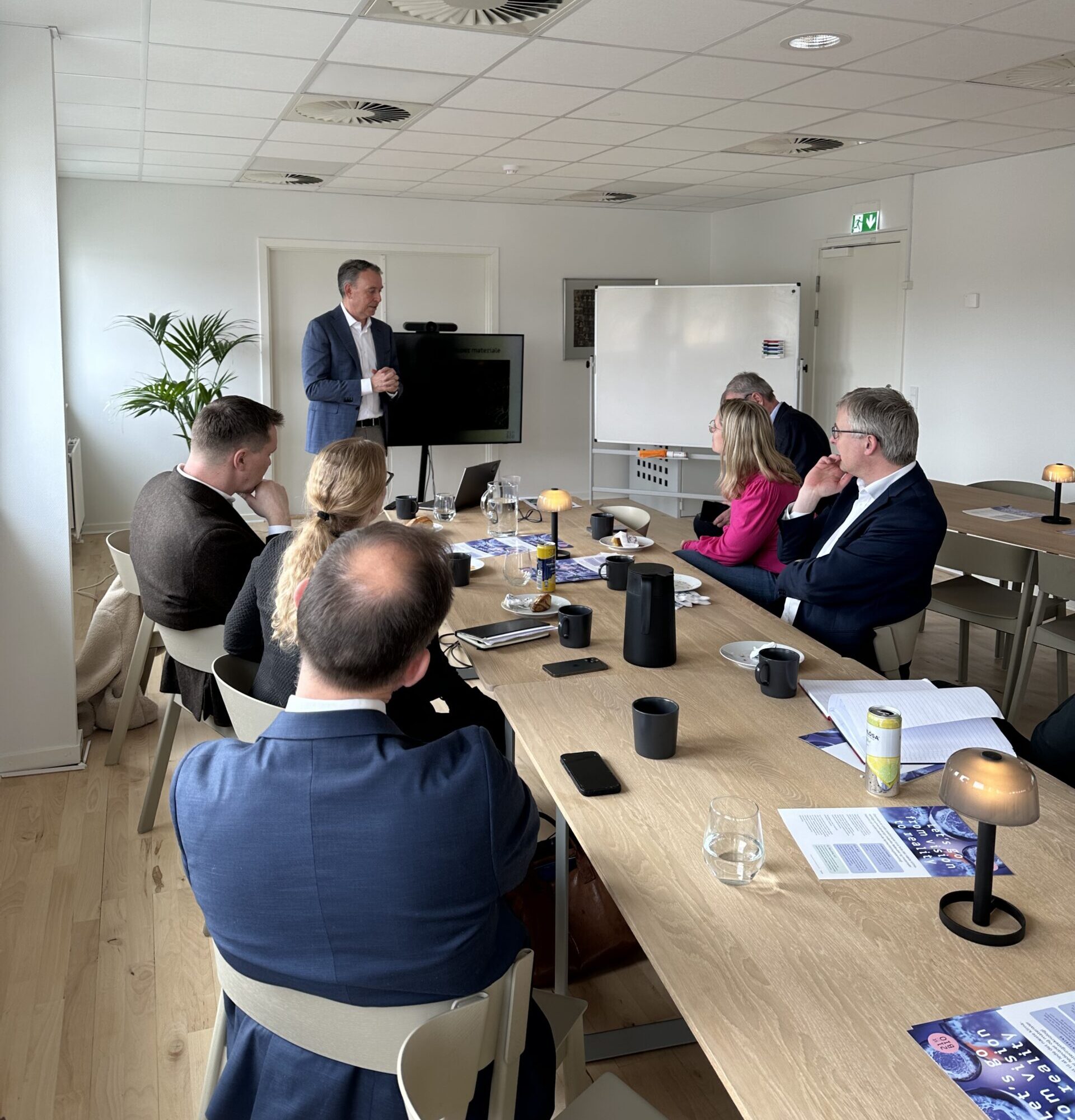
Last week was another great event for us at 21st.BIO: we had the pleasure of opening our doors to a delegation of ministers and interest organizations leading the important green three-way negotiations.

We discussed how we in Denmark can be a driver of the next revolution in nutrition and materials via our leadership in the precision fermentation of proteins.

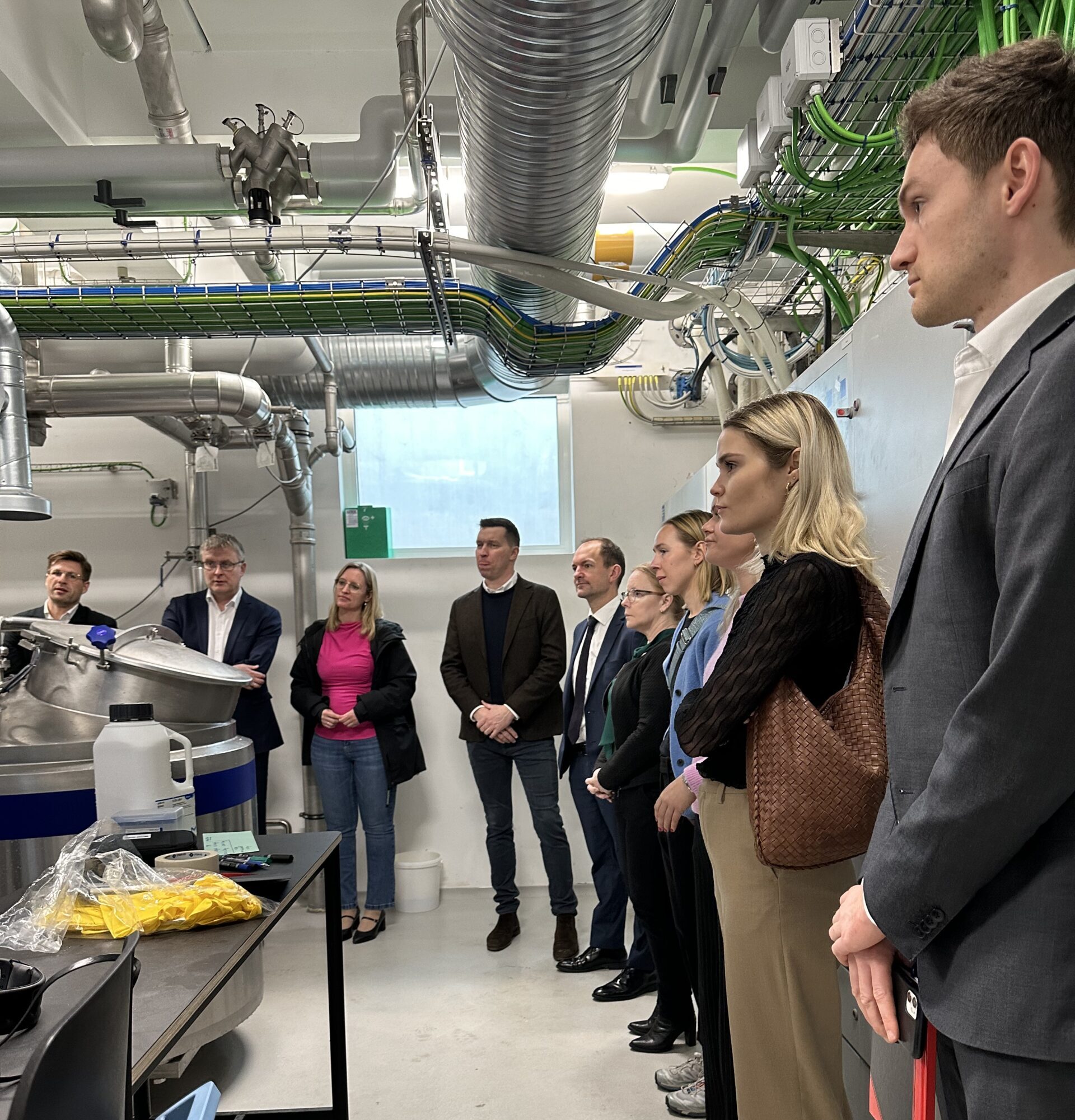
We had the opportunity to show the group around our soon-to-be-ready pilot factory and share our vision and ideas for how Denmark leads the way for Europe in the quest to produce the protein that the world needs in the future, sustainably.

Some of our key messages were: 
▶ Denmark is world-class in agricultural production and protein understanding.
▶ Denmark is world-class in the industrial bioproduction of proteins with precision fermentation.
▶ Denmark is world-class in energy solutions.
▶ Denmark has a proven track record of scaling climate technologies with favourable schemes.

Let’s get the industrial production of proteins with precision fermentation off the ground in a partnership between the parties that have successfully built these industries – from agriculture to energy industrials. And let’s contribute with the solutions that can fill the protein gap – and build a great new business adventure for Denmark on the way.

Thank you all for visiting, listening and being open to discussion 🤝

Secret Link