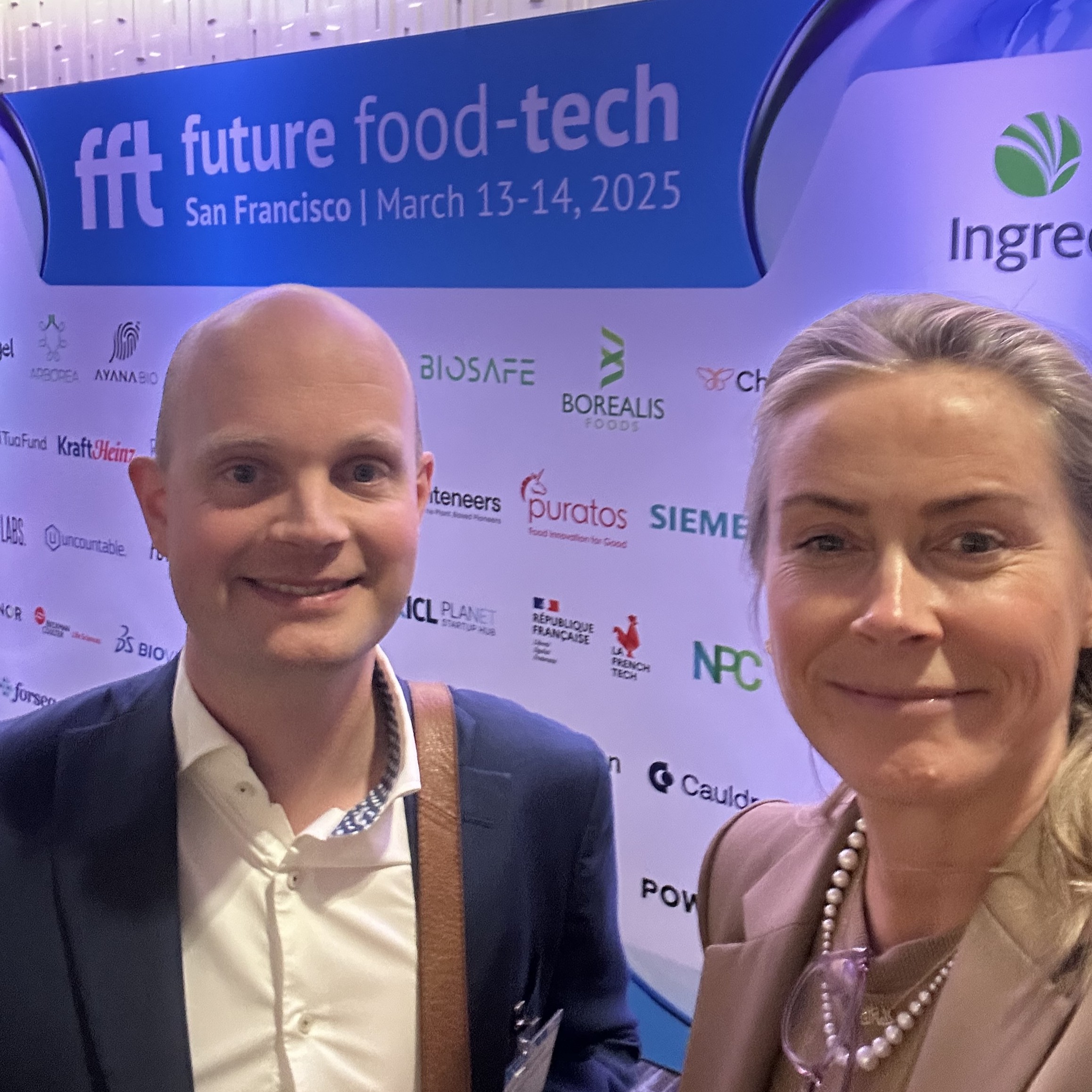


We’re back from Future Food-Tech – and the message is clear: Resilience in food supply is top of mind.
Our colleagues Barbara Taudorf Andersen and Henrik Geertz-Hansen just returned from San Francisco, where industry leaders echoed a shared concern: How do we ensure a stable supply of high-quality proteins in an era of increasing demand, geopolitical uncertainty, with viruses like bird flu, consumer demand for more protein dense foods, and climate challenges?
Precision fermentation is gaining traction as the solution for complementary protein production at scale. It’s increasingly seen as the technology of choice to secure ingredient supply while meeting sustainability and cost targets.
Cost matters more than ever. The food industry is looking for solutions that are both cost-effective and sustainable – premium-priced alternatives have little room to grow.
The role of proteins in nutrition is expanding. From general well-being to specific needs during medical treatments, the focus on high-quality, functional proteins is stronger than ever.
GLP-1 drugs are reshaping food habits. With major players discussing the impact of these drugs, one key takeaway stood out: patients need protein-rich, light, and digestible nutrition.
It’s clear: the industry is shifting, and those who can deliver scalable, cost-effective, and sustainable protein solutions will be the ones leading the way.
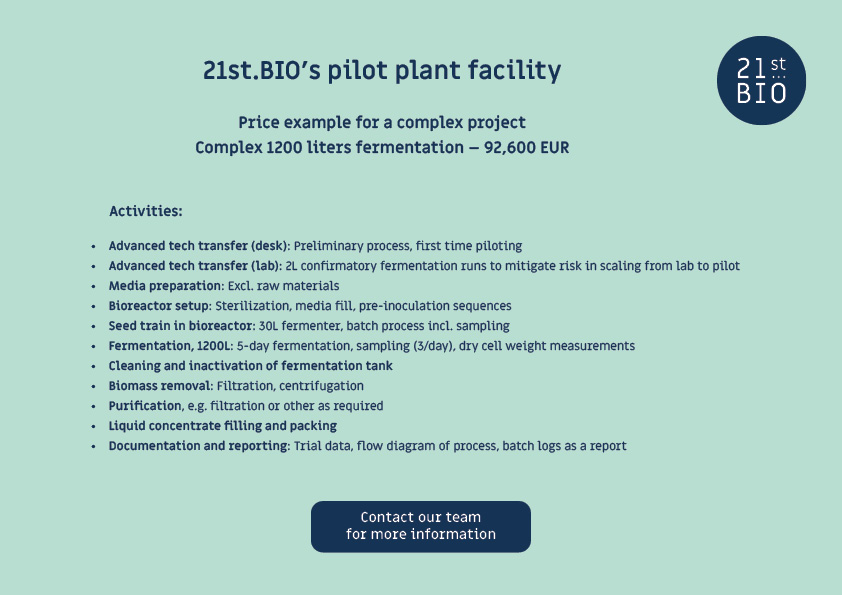
At 21st.BIO, we’re happy to see the market confirming what we’ve long believed – precision fermentation is key to securing the future of protein supply. Our business model and portfolio are designed to help more and more companies bring scalable, cost-effective, and sustainable protein solutions to market – in record time.
Beta-lactoglobulin, caseins, alpha-lactalbumin, sweet proteins… what’s the next product we can help you make a reality?